Tuesday, 25 October 2011

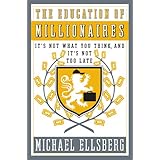
Review: The Education of Millionaires


The Education of Millionaires contains a damning analysis of the US higher education system (and likely soon-to-follow in the UK given recent rises in tuition fees).  Basically, it concludes that it is no longer fit for purpose (and actually in something of bubble). 

Ellsberg argues that the cost of higher education ($100K+ to get a degree and then a Masters)  makes it an increasingly risky proposition in today's economic environment ie a quality formal education no longer entitles you to a job paying enough to even clear your debts (never mind profit from the investment).  Further he charges the skills developed within the higher education system are of limited use in the real world (and hence the high numbers of graduates struggling to find even low paid jobs).  And this applies even to the business schools.

Lastly, he suggests that reliance on a single burst of higher education in a person's life isn't enough to guarantee job security.  In other words, the old adage, beloved of middle class parents everywhere, of get a good (ie university) education in order to secure a good job no longer holds water.  The education ain't what it used to be, and the jobs are often not good or secure.

As someone who has both studied (and worked) in higher education I have a lot of sympathy with Ellsberg's point of view.  Most courses are designed to teach a limited set of skills which are mostly of use to students wanting a career in academia.   In fairness, quite a few tenured academics will freely confess this if asked (and often bemoan the floods of students washing up to their lectures who have neither the ability or interest to follow a career path in academia).   Many students, in turn, appear to sense something is wrong (especially once they start looking for work) but cannot put their finger on the problem.   Note, this isn't a complete slamming of higher education (on my part at least), for some careers it is still a hugely valuable path to take.

Fortunately, Ellsberg has a solution. He suggests young people model their development on that of successful self-made non-conventionally educated business people even if their ultimate goal is to be a employee.   He boils this down to 7 key skills (accompanied by case studies from the self-made rich):
  • Work out what a meaningful life is for you
  • Find great mentors
  • Learn marketing
  • Learn sales
  • Continuously re-invest in your own self education
  • Build your personal brand
  • Develop an entrepreneurial mindset (rather than an employee one)
Again, as a self-confessed autodidact who enjoys bootstrapping small internet experiments in my spare time and coming up with/implementing unsolicited stuff in my day job this approach (and the effect) mirrors much of my own experience. Usefully, I found plenty to chew on myself (sales, marketing, personal branding and networking chiefly)

There is some fantastic practical advice here - and I would have happily read a lot more of it although the case studies add a great human dimension.  Even if you don't end up agreeing with the book - I think it's an eye opening look at a different way to be successful. Highly recommended.


Saturday, 22 October 2011

3 reasons why Steve Jobs is right (and wrong) about Google

The Register has a few choice quotes from Steve Jobs' new biography which is out on Monday. He has some particularly incendiary stuff to say about Google and Android.

Android is "grand theft"

I have some sympathy with this. The iPhone was the first smartphone to get it 'right' in my experience - i.e. produce a smartphone for ordinary humans that was quick and easy to use.

I had a smartphone (the O2 XDA exec) and while it did everything it said on the box, it wasn't particularly nice to use. You needed a stylus to make it have a chance of hitting the icons on the screen and it was darn slow.  Sometimes, due to button placement and the time it took to get it out of its case - you either accidentally disconnected the incoming call or it went to voice mail because you couldn't open it up in time.


If you were going to pick a phone to copy...ahem...improve on - the iPhone was definitely it.

So Android definitely learnt a lot from iOS.  But who doesn't stand on the shoulders of giants in the tech world nowadays?  And it's clear that Apple is not adverse to learning from Android from time to time either (notifications anyone?)

"I'm going to destroy Android, because it's a stolen product. I'm willing to go thermonuclear war on this."

Never going to happen, Steve. Here's why. There will always be a market for Android while Apple's phone offerings are either 2+ year old tech (3Gs) or £400+.

I had the first generation of iPhone because I needed a new MP3 player and  I managed to buy it new for £150 and unlock/jailbreak it.  That seemed like decent value. It was fifty quid more than an iPod touch and the extra cash bought a camera and a phone. 

Fast forward a few years and my latest smartphone is an Orange San Francisco. Under a hundred quid and better specs in most respects. Similarly, the Android OS has quite a few more features than iOS and they aren't locked down (e.g. tethering).  But it's real clunky compared to iOS.  Settings are often buried deep.  There's plenty of interface clutter and Marketplace...

Sure I'd like to have upgraded to the iPhone 4 earlier in the year but it's not 4-5x as good as my San Francisco.  Siri may yet help tip the balance back again though. Android's voice stuff is an embarrassment (at least in the UK).

The caveat to all of this, of course, are all of the patent battles going on between Apple and practically everyone else.  I suspect no-one, except the lawyers, will come out smiling after those.

Google is making products "that are adequate but not great. They're turning [Google] into Microsoft"

Steve is absolutely right on this. Outside of search (and perhaps Gmail), including Android, Google's recent offerings lack a certain polish or even vision. 

For all of the hoopla around Google Plus it isn't yet a place I'd go to instead of Facebook (or even as well as if I'm honest). Circles is a considerable step forward in managing your contacts and the uploading of pics from my Android phone is great but Plus seems like a collection of bits and pieces rather than a proper destination at the moment.

So like Buzz and Wave before it - I don't quite get it. Now that was true of Twitter to start with but within a few minutes it just clicked.   I'd love to be wrong about Plus. Perhaps there is a simple profound vision for Plus - but I'm not seeing it yet.

There's no excuse for it either - Google have some of the best techs in the world and must have reams of useability/market data.  I'm not sure the approach of letting a thousand flowers bloom is entirely working right now.

Wednesday, 19 October 2011

Review: The Fear Index

The Fear Index is thriller writer, Robert Harris' latest and this time he tackles the murky world of automated trading, hedge funds and artificial intelligence.

Alex Hoffman,  the billionaire owner of a algorithmic hedge fund is having a very bad day.  Normally, such a person wouldn't be deserving of anyone's sympathy but Alex is an unworldly physics geek turned super-quant and he's not really in it for the money (honest). 

As is normal with many of these kinds of books (Crichton I'm looking at you) all of the author's research is lovingly woven into a fairly sparse plot, punctuated by blasts of financial exposition and populated by thinly but sometimes amusingly drawn characters.   Thankfully the flashes of wry humour lift it slightly above most airport novel fodder.

I found it a fairly compulsive fun read (and showing a little more restraint than the average Clive Cussler who I normally rely on to provide this kind of guilty pleasure). As a result I happily devoured most of it while the missus was at her evening class.

Whether you will enjoy it - depends a lot on your interest in the subject matter. Personally, the geeky finance and automated trading stuff ticked all of the boxes for me - even if I didn't really warm to any of the characters or their plight.   And the central conceit has been done much more interestingly before eg Neuromancer.

Buy it from Amazon.co.uk >

Saturday, 20 August 2011

E-myth revisited review

    E-myth Revisited: Why Most Small Businesses Don't Work and What to Do About It [Paperback]   The E-myth revisited is a book I've been meaning to read for a while now. The E in E-myth stands for entrepreneur rather than electronic as you might guessed.

The author - Michael Gerber - starts with with some grim facts. Rather than being the way to the American dream - most small businesses fail or turn into a job ie the business ends up owning you rather than vice versa.  It's hard to dispute these - the small businessman who works all hours in a corner shop or launderette is almost an archetype.

But does he offer any real solutions? The answer is yes - but only at a fairly superficial level. Basically, you can sum up his philosophy like so: professionalise your business from the outset. It's great advice but not something unknown to me although perhaps very useful for a new business owner or one trapped in the archetypical corner shop desperate to get out.

He pays particular attention to the franchise model and suggests you follow their model of operation. So do to this you should describe all of the various roles in the company before you start up (even if you are the only one filling them!) and create documented systems incorporating as much automation as possible.  There is also some good advice around handling your first employees (delegation rather than abdication). All - perhaps uncommon - commonsense but very short on specifics.

One last thing, the book is mostly related as a conversation between Michael and a local baker he is helping out.  This adds a great deal of charm and makes it easy to take in the learning. It's a fairy tale for small but struggling business peeps everywhere.

Free books for Kindle gets a mention in the London Evening Standard

A friend of mine excitedly texted me a pic of page 43 of the yesterday's London Evening Standard.

It turns out that my book had been mentioned on their Letters page. It was a lovely surprise to finish the week on.

If you'd like to get a copy of my Free books for Kindle book yourself, check out the following links:

Buy it now at Amazon.com >
Buy it now at Amazon.co.uk >

Saturday, 6 August 2011

The Millionaire Fastlane review

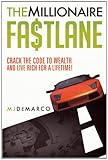
The Millionaire Fastlane: Crack the Code to Wealth and Live Rich for a Lifetime.I'm a compulsive reader.  The missus will often call up the stairs and ask what I'm what I'm up to and then sigh at the answer: "I'm reading". 

 The trouble is that after a while some of the books blur into one.  Was that killer quote in that book or this one?  And that brilliant idea - where exactly was it again?

Perhaps I am just getting old and forgetful. 

Anyhow I recently read something very useful. If you want to remember, you need to take action on the thing you read. And right next to it was another cool piece of advice - blogging about the key ideas in the book is a great way of installing (yep another computer analogy) the key ideas into your mind. 

This is all just a roundabout way of explaining the reason for writing this blog post.  The other reason is that MJ DeMarco has written an excellent book which deserves your reading consideration. 


The Millionaire Fastlane

The author is obsessed with fast cars - Lamborghinis in particular. Not the obvious choice for a diehard cyclist like myself but I'd heard a lot of good things so thought I'd persevere.  He uses this enthusiasm for fast cars and driving to tell the choices you can make in life about becoming wealthy:

  • Sidewalk
    Basically credit junkies who spend everything they earn (and more). They hope the lottery will make them rich.

  •  Slowlane
    Save 10% of your paycheck, take up a pension, be an employee. If you are lucky, you'll retire somewhat wealthy.

  • Fastlane
    Create a business but make sure it has a large potential market (or a small one willing to pay a lot), isn't dependent on you (or ideally any other human resource).  Then look to sell for a mint and live off the invested income.

MJ spends quite a bit of time blasting some of the get rich quick competition (suggesting most of them either focus on the slowlane or actually made their fortune through telling others how to become rich ie the old selling wheelbarrows to prospectors in a gold rush trick).

Finally, he spends a bit of time giving Tim Ferris of the Four Hour Work Week some friendly cuffing. He slams Tim on customer service in particular.  This is a shame and not entirely justified. The Four hour work week is actually good on this as Tim gets his customer care team to work to particular rules and says they can spend several times the cost of the product to resolve unforeseen problems using their own initiative. I suspect in real life, Tim and MJ would actually get on like a house on fire - their style and material is highly complementary.

The book is quite a slow burner but a compellingly enthusiastic and fairly fluff-free read. You really do get the impression he has actually lived this (which is not that surprising as he did have a very successful internet based limo business which he started from scratch).

He is very mathematically minded and the book is sprinkled with formula so beware if maths is a weakness. If shouldn't stop you reading, but you could find your attention wandering...to that interesting piece of wall right over there.

But it's not until the later half that he starts to tell you the things he thinks you should focus on:
  • Superb customer service.
  • Working out what you can excel at (ie a USP).
  • Meeting people's needs with your product or service.
  • Creating a brand rather than a business.
  • Focusing on benefits rather than features.
  • One business - not many.
  • Time. You can always earn more money, you can't get more time. 
  • The income you need. Very similar to dreamlining in Four Hour Work Week - but much more in-depth.
  • Repeating or replicating success.
His technique for turning features into benefits was pretty useful to me. Basically, put yourself in the mind of the consumer and ask yourself what are the advantages of each feature.

The internet side was very appealing to me because it mirrors what I've learned through experience.  An internet based business lends itself to automation (or systematizing), can be low on human resource, can scale fairly easily and has a global market.

 More challenging was hearing I should focus more. I am the archetypal business butterfly - I think perhaps because I treat them as hobbies rather than a source of income.  I like to experiment - see what works (and how it can be applied to my day job), automate or dump it and move onto the next thing. This is perhaps fine if I want them to stay that way.  

Secondly, I should move away from being an affiliate or a publisher dependent on one source of income. This makes a huge amount of sense. I have been shafted by the dreaded overnight change in T&Cs before.  It's contributed a lot to my treating the whole thing as a hobby rather than a serious activity. 

In summary, I got an awful lot of this book. It came at exactly the right time for me. Sure, it is quite pricey (perhaps try the US for a secondhand copy rather than the UK) but worth it in my opinion.  It is really refreshing to read someone who has actually done it and offers more than just inspiration.

Friday, 5 August 2011

Are the conspiracy theorists right?

With all of the financial and political turmoil going on in the world - it's tempting to wonder is this all planned? Could it have been prevented? Why does history seem to be repeating itself again?

One of my hobbies is hanging out on what might be regarded as the more lunatic fringe of some economic discussion forums.   Amidst all of the lizards, hopes and dreams - a consensus kind of emerged a few years ago that was surprisingly prescient.  From around 2005-6 (some even earlier) some were saying - a big crash is coming. The credit bubble is the biggest the world has ever seen and it's going to end horribly. The really out there posters suggested it was going to be bad enough to take down entire countries.

Now I come a position of complete ignorance of the economic system but it seemed that what many on the boards were saying was a darn sight more helpful and insightful than the economic mantras perpetuated by the media and repeated by people I know.  I'm a natural contrarian so that probably also helped.

But the nuttier posters turned out to be right. 

The crash has come to pass and we appear to be lurching from crisis to crisis of generally increasing magnitude.  So to return to my earlier question - is it all part of some massive matrix like scheme?

I would really like to think so but I doubt it. In my limited experience, the powers that be are often not much different to you and I.  They are driven by many of the same things:
  • Greed
  • Fear
  • Desire to maintain/improve position in world
  • Short termist thinking
Let's pick just one of these. Short term thinking.

Despite our ability to reproduce - we think short term. Do we really care what happens to our children and their children? History suggests not as we always vote for Governments which look after us at the moment rather than our children.  Few will vote for something that will make their lives much less comfortable but their children's or grandchildren's far richer.

Short term thinking is rife. Many are really just living from paycheck to paycheck with nothing more than dreams rather than concrete plans to guide them. Public companies work from quarter to quarter or perhaps yearly results. Politicians work to the next election.

Perhaps a few - like the families which have been rich/powerful for generations - are guiding things over a longer term.  It would make sense. They have more to lose, have the time to have properly observe how things happen and the influence to make meaningful change.

But one has to ask that if this is the case - why do the bad economic things in history appear to repeat or at least rhyme so much?  It's either:
  • Accidental ie the rich and powerful forget the mistakes of the past as well.
  • Deliberate ie there is a grand plan.
  • Baked into the systems we create, the environment we live in and our DNA.
Personally, I think it comes down to a bit of planning to maintain their position, plenty of incompetence (or forgetfulness) and quite a bit is due to the systems and ourselves.

Basically, even the rich and powerful are bit sh*t when you look at it. And when things go wrong it is often down to cock-up rather than conspiracy.

What do you think?