Friday, 1 January 2016

7 storytelling tips for communicating digital transformation

Recently, I was given a fantastic opportunity: one of my bosses would pitch my definition of digital transformation to our senior team.  If they accepted it, there was a strong chance it would go into the charity's organisational strategy.   

My digital transformation definition

  • Everyone in the organisation making the most of digital to massively improve their impact 
  • Using digital tools and techniques (like lean start-up) to put the customer first and make the most of our limited resources
  • The organisation being prepared to consider changing what it does, and is, as a result of digital disruption. 

Why is digital transformation important? 

Digital technologies are one of the major forces for disruptive change in the world today.  All organisations need to consider how they respond to the challenge, or risk becoming extinct like Kodak.  In many cases, they should consider a transformative response. 

One model for constructing a response is the Academy of Digital Business Leaders (ADBL)’s seven digital imperatives.

For our pitch, I decided to use a storytelling approach which would apply them to our context.  

7 storytelling tips for digital transformation

1. Decide on your plot

digital transformation as a quest - footprints in a desert
Digital transformation as a quest
There are seven basic plots that stories can take.  For incumbent organisations,  digital transformation arguably naturally lends itself to a quest.  This is where the hero goes on a journey which has challenges and difficulties they have to overcome. 

But if you are being actively disrupted by digital or a start-up seeking to do the disruption, then a David and Goliath style overcoming the monster plot might be a better option for you. 

2. Don’t be afraid to mix it up a bit

Stories can start from anywhere. You can start at the end, and the hero can be telling the tale, or at the beginning and carry your audience with your hero. Or like Quentin Tarantino, you can even be non-linear.

You can combine plots.  Our presentation included some elements of an overcoming the monster plot to talk about digital disruption. 

Don’t forget to include humour if appropriate.


3. Pick the right format for the job

While the main presentation would be an image led PowerPoint presentation, we were also given the chance to submit a background paper. If we weren’t careful, it might be lost among the other dozen or so papers. So to stand out I produced a two page comic strip outlining the key concepts to build understanding prior to the pitch. 


digital transformation as a comic strip
Digital transformation in comic strip form

4. Cover the bases

Some people like to listen and imagine. Others like to watch and read. A few are data centric and prefer graphs and numbers.  Make sure your story caters for them all.

5. Give options - but make your preferred choice more appealing

We wanted to make our vision of a fully transformed organisation more compelling than one where it was simply better at using digital.  To do this, we used more aspirational imagery and wording in our preferred vision.

6. Use metaphors

Use metaphors - a storytelling tip
A customer centric website
Metaphors are ace. They allow your audience to build on existing knowledge in a non-threatening way.

For example, our website is often the subject of controversy as different people have a different view of who it should be for and what it should do. I had to say something about the website, but what? and how could it I illustrate it?

I used a metaphor of two people walking in the desert and coming across an oasis to help senior managers picture what a customer-centric approach to our website could look like.

In another slide, we presented the digital transformation choice as a metaphor of a car versus a faster horse with a famous quote from Henry Ford:


Henry Ford quote
Henry Ford quote.

7.  Give your audience a chance to shine

Our first draft got a very valuable piece of feedback. One boss liked it, but couldn’t see what their role would be.   If you can make your audience the hero, or strongly identify with the one in your story, so much the better.  I hastily re-wrote the notes for the slides to make it clear. 


sunk cost
"The leadership team drove the organisation's understanding
of sunk cost and how to use digital techniques to reduce it"

Bonus tip: Be unexpected

Listen to data rather than HiPPOs
 (Highest Paid Person's Opinion)
Unexpected is risky. Unexpected is scary. But unexpected also moves people and is memorable.  For example, we used a picture of hippos fighting to illustrate the importance of data in digital decision making.

Have you ever used storytelling tips in your digital transformation journey? Do you agree with my digital transformation definition?

Let me know in the comments.


Further reading:

The Seven Basic Plots: Why we tell stories. A good introduction.
The hero with a thousand faces - Delve deeper into story and character archetypes.

How to start a movement with Derek Sivers

I rather liked the simple message in this. Embrace your first follower as an equal.  I wonder what the first follower of our new movement would look like.


Tuesday, 15 December 2015

Review of 2015 Macbook

As a regular traveller, I am always on the lookout for a laptop which has the following:

  • Weighs almost nothing
  • Incredible battery life
  • Fantastic keyboard for touch typing
  • Decent amount of power
  • Reliable and needs no/little maintenance
  • Can take a bit of a battering
  • Good screen for reading
  • Good support if something goes wrong. 
  • Quiet
Over the last seven years, I've gone through a number of laptops in the quest for this holy grail.  I started off with an Eee PC (one of the first netbooks). It was certainly lightweight - but failed on almost every other count. Then the Acer netbooks came out. Their big failure was reliability. The one I had would regularly corrupt its bios on startup rendering it unusable for the remainder of the day. 

I then moved onto secondhand IBM Thinkpads - and they managed to tick off most of the wish list. At least, until the LCD starting bleeding on a particularly cold day.  It was at that point my wife suggested I should stop buying cut-price laptops and buy something decent. 

In the last five years, I've stuck with Macs.  They aren't perfect, but they are less hassle all round and they tick most of the boxes.  

I started with a Macbook Air, then moved onto the 13 inch Retina Pro for a better screen- and now I've just swapped that out for a 2015 Macbook. 

The Macbook takes most of what I like about the Pro, and turns it into a much lighter and quieter beast. 

Weight wise, this is barely heavier than the first generation iPad. 

Noise wise, it is fanless and has an SSD for a hard drive so is completely silent.  Laptop nirvana. The only problem is that you trade power and the occasional beach ball of death for the quietness. Usually it does sort itself out in the end - but this is not a laptop you are going to push to the same limits as a Retina Pro.  That said the limits are pretty good. I regularly have up to 30 tabs open as well as a full Office suite. 

The battery life remains impressive. I can often get 6-9 hours out of mine depending on what I'm doing on it. 

The keyboard is a love it or hate it affair.  Keystrokes are shorter than previous Mac keyboards, but the feedback resembles that faint rumble of a 70s calculator.  Personally, as a touch typist I prefer it. The older keyboards feel mushy in comparison now. 

I'm sure this is the personal choice, but I find the Mac backup and updating experience nicer and easier than that of Windows. It simply works unobtrusively - and bar the odd update I never shut the computer down anymore. 

In spite of its extreme thinness and lightweight this computer feels robust. It doesn't flex or wobble in normal use. It's unlikely to bend or crack while carrying it and having no moving parts is practically shock proof. 

Finally, the screen is as good as the Macbook Retina Pro for reading. 


Monday, 9 April 2012

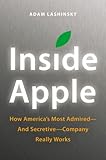
Review: Inside Apple

Inside Apple: How America's Most Admired--and Secretive--Company Really WorksInside Apple is an account of the Steve Jobs era of corporate culture at Apple (although it does speculate on what the future might be like under Tim Cook's tenure).

It's fascinating because it seems the author got very little actual access to Apple and instead relies on ex-employees (often reluctant to talk - even when they have good experiences to relate), leaks and what others have surmised over the years.  Somehow he still manages to weave a compelling tale although it's hard to be sure just how true it is.

The first rule of working for Apple; is that you do not talk about Apple. Secrecy seems to be part of the company's DNA.  The other picture that emerges is that it was very much Steve's vision which drove it - he manages and micromanages every thing from product design to ad placement. There's an interesting discussion on this leadership style - which seems to be something like productive narcissism.  He plays favourites - both projects and people; he's by turns hectoring or praising. He's visionary yet lacks empathy.  Tim Cook by contrast is the consumate obsessive leader - a highly inner directed self starter and conscientious.  It seems they made a fantastic partnership - each able to complement each others strengths and weaknesses.

Apple it turns out, also want everything from you in return for only a decent rather than lavish salary.  There are tales of execs being sent to China at the drop of a hat and some being so burnt out they aren't able to move on something else when they leave Apple (although there are exceptions). That is the price of  producing insanely great products or putting a dink in the universe.

I also enjoyed the account of how Apple is fighting corporate senescence by trying to run itself like a start up.  Unlike cities, the author contends - companies appear to have a definite lifecycle mirroring our own of S curve of growth, plateau and decay.

There are lots of useful ideas in this book and I recommend it.

Thursday, 23 February 2012

Writing and gamification

I've become a recent convert to Scrivener. It's a piece of software designed to help writers organise everything from their research and random thoughts to the final work.
But it's also a lovely example of subtle gamification (the idea of making tasks more rewarding and more likely to be done by borrowing from the gaming industry). One of the things you can do with it is set a project target (ie how many words you need to write overall) and also a day's target (how many words you need to write that day).
For my current book, I've decided I want to write around a thousand words per day and forty thousand words in total by sometime in April. Up pops the targets window which I can park next to my writing window (I knew there was a use for these new fangled widescreens).  It's a wonderful feeling seeing the number of words gradually increase as you type and the target progress bar also turns from amber to green in colour. Go over the target number of words and you are rewarded with a lower target number of words to write the next day.
It's certainly helping to crystalise my new habit of getting up first thing, sitting at my desk and hammering out some prose while eating breakfast.  Seven days so far - can I make it to the magic twenty one or so days it takes to embed a new habit? I hope so as it gives a wonderful feeling of satisfaction to start your day with a good chunk of words under your belt.

Tuesday, 21 February 2012

How an old idea becomes a new one: A cynic's view

Here's how an old idea becomes a new one:

1. Someone takes an old idea (or a subset of an idea) and dresses it up with a fancy new phrase. Often by combining something old with something new.  So a spontaneous Friday lunchtime visit to a wine bar with your trendy mates becomes flash-drinking or crowd-boozing. 
2.  Everyone else is bowled over - except for a few jaded old cynics who say this just something we were doing many moons ago ie drinking in their local pub. 
3.  Inventor of fancy new phrase huffs and puffs a bit. Decides to write a book or do a VIP (Very Important Project). The phrase evolves a number of derivatives e.g. crowd-mash-up (the name given to a busy Shoreditch pub where crowd-boozing takes place), flash-glassing (what happens when trendy folk talk too loudly in a local pub) etc. 
4. A few, perhaps even quite a lot, are taken in. Inventor goes on speaker tour around crowd-mash-ups or has a column in a national media outlet. 
5. Eventually, the new idea becomes old, loses its shine and everyone carries on doing what they were doing before i.e. drinking in their local pub. 
6. Inventor still has to pay the mortgage so goes to step 1. 

Thursday, 16 February 2012

Is hard work a good idea?

There was an interesting programme on the box the other night.  It was all about the poor in America. Now being poor in America is perhaps the unluckiest of situations to be in. You live in an apparently wealthy country, yet the philosophy of undeserving poor is strongly engrained within it.  As a result, those who have lost their jobs can end up living in tents or their car and have no real means of receiving medical treatment.  The sense of a collective responsibility for one's fellow citizens is not strong in the US.

The interviews with people in tent city all seemed to demonstrate the same. These were all people who believed in the American dream that hard work creates success - and yet somehow the success had evaded them.  I guess many blamed themselves.

I flip-flop on the idea of a work ethic. Like morals it often seems to be only for the poor people, and this should make anyone suspicious.

On the other hand, those without sufficient work often do not seem to thrive - whether they be millionaire playboy sons or the long term unemployed. And on a personal level, I've been lucky enough to have a succession of generally rewarding work. I would also consider myself a lazy person; if I can I will avoid boring or seemingly pointless work (even to the extent I'll work harder to create a system to avoid it). Thankfully, with a very few exceptions, people have been understanding.

But the key word here is rewarding. Of course, some of this comes down to your approach to your work.  Even the worst job may have rewards that are obscured to most. But for most people, a lot comes down to the working environment (is the boss a tyrant? do you have some degree of freedom over your work? are you appreciated? is there hope?) and whether you can live a decent existence on the wage available. If work doesn't tick the rewarding box, again you do not benefit from a having a work ethic - although it may make your situation bearable and rewarding on some level.

Also there's a wider context, there's simply less demand for the average person's skills (never mind those who have hardly any) than there used to be thanks to automation,  etc. Under such circumstances, encouraging a traditional work ethic, where hard work equals more pay and a better life, seems perverse and mean (the situation in the US). And yet, the successful people I've met have also been highly driven, often hard working people. But perhaps this is correlation rather than causation or perhaps hard work isn't the catalyst, simply a pre-requisite.

Then there's the idea that your hard work may put others out of work. Unpaid overtime seems to be on the increase in the UK, yet unemployment is also growing.  In such situations, is working harder the ethical thing to do?